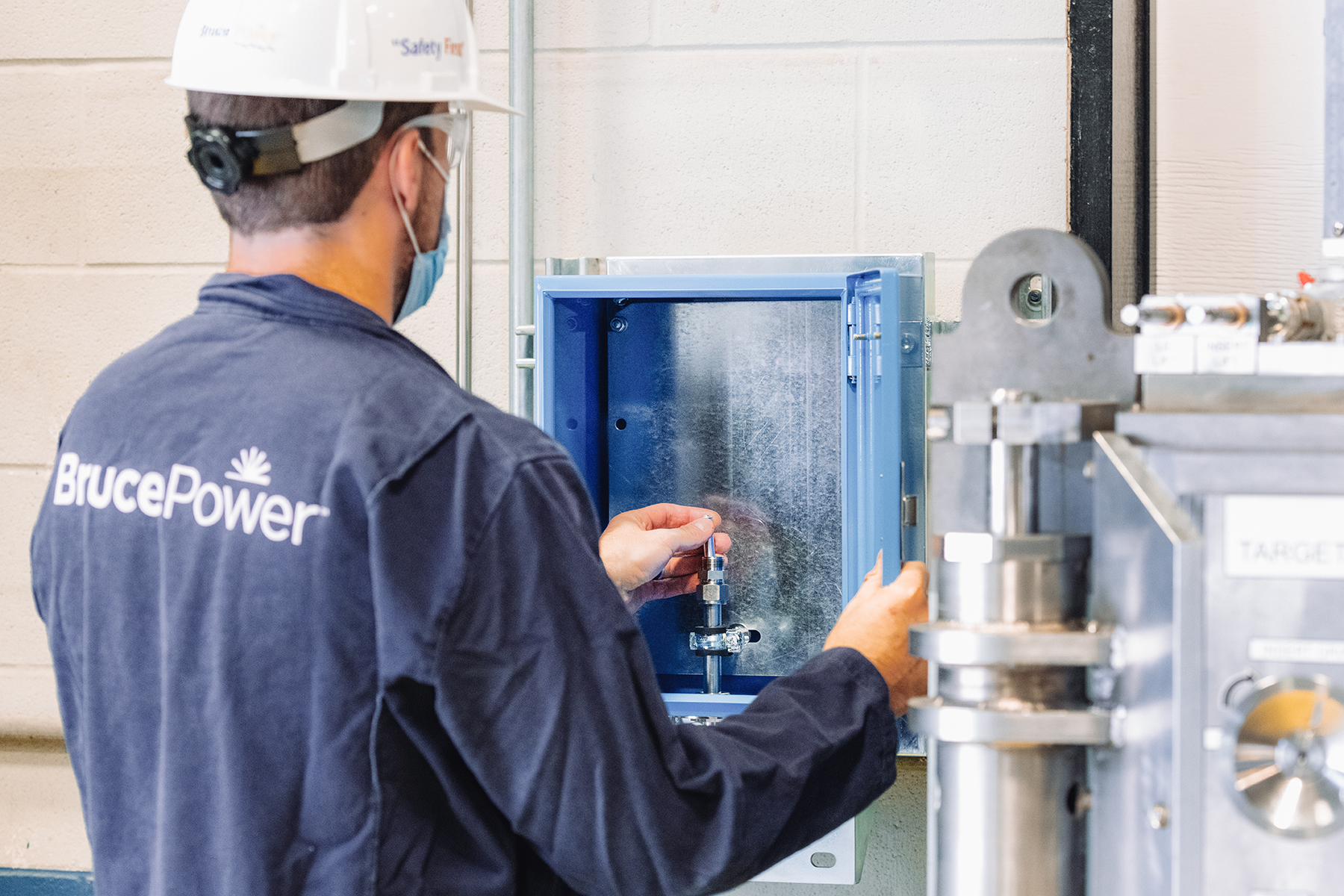
Bruce Power and Nordion will increase Co-60 production at the Bruce nuclear power plant in Ontario. (Photo: Bruce Power)
Bruce Power, the utility in Ontario, Canada, and health-care company Nordion announced that they are working to increase the production of cobalt-60 to meet increasing world market demands. The companies said they will increase the amount of Co-60 Bruce Power is able to produce in its reactors “by innovating a new adjuster component configuration.”
SHINE Technologies founder and CEO Greg Piefer shows the hot cell banks that will be used to produce Lu-177. (Image: SHINE)
Fusion tech company SHINE Technologies announced that it is opening the largest facility in North America dedicated to the production of non-carrier-added lutetium-177, a medical isotope used in targeted cancer therapies.
Situated in a 30-foot-deep pool, the 10 MW core of MURR is used to irradiate samples and produce isotopes for medical radiopharmaceuticals and research. (Photo: University of Missouri)
The University of Missouri intends to build a new, larger research reactor to produce medical radioisotopes, announcing that it intends to issue a request for qualification/request for proposal (RFQ/RFP) in April to solicit interest from qualified parties to provide preliminary designs and industry partnerships for the new reactor project, called NextGen MURR.
SHINE’s Chrysalis production building, under construction in October 2022. (Photo: SHINE)
The Nuclear Regulatory Commission has issued the final supplemental environmental impact statement (EIS) for SHINE Technology’s application for a license to operate a medical isotope production facility in Janesville, Wis.
SHINE’s isotope production building, called the Chrysalis, under construction in October 2022.
In a former farm field just outside the historic town of Janesville in south-central Wisconsin, a large concrete-and-steel building is taking shape. Dubbed the Chrysalis, the building will eventually house eight accelerator-based neutron generators, which start-up company SHINE Technologies will use to produce molybdenum-99. As the precursor to the medical radioisotope technetium-99m, Mo-99 is used in tens of millions of diagnostic procedures every year, primarily as a radioactive tracer.
At the heart of the Chrysalis will be the high-flux neutron generators, being supplied by SHINE’s sister company, Phoenix. The compact accelerators use a deuterium-tritium fusion process to produce neutrons, which in turn induce a subcritical fission reaction in an aqueous low-enriched uranium target (19.75 percent uranium-235) to produce Mo-99.
Bruce's Unit 7 is now producing Lutetium-177, used in targeted cancer therapeutics. (Photo: Bruce Power)
An international collaboration between Bruce Power, Isogen (a Kinectrics and Framatome company), and ITM Isotope Technologies Munich SE (ITM) announced they have begun commercial production of lutetium-177 using Unit 7 of the Bruce nuclear power plant in Kincardine, Ontario. According to the companies, this marks the first time a commercial power reactor has been used to commercially produce short-lived medical radioisotopes.
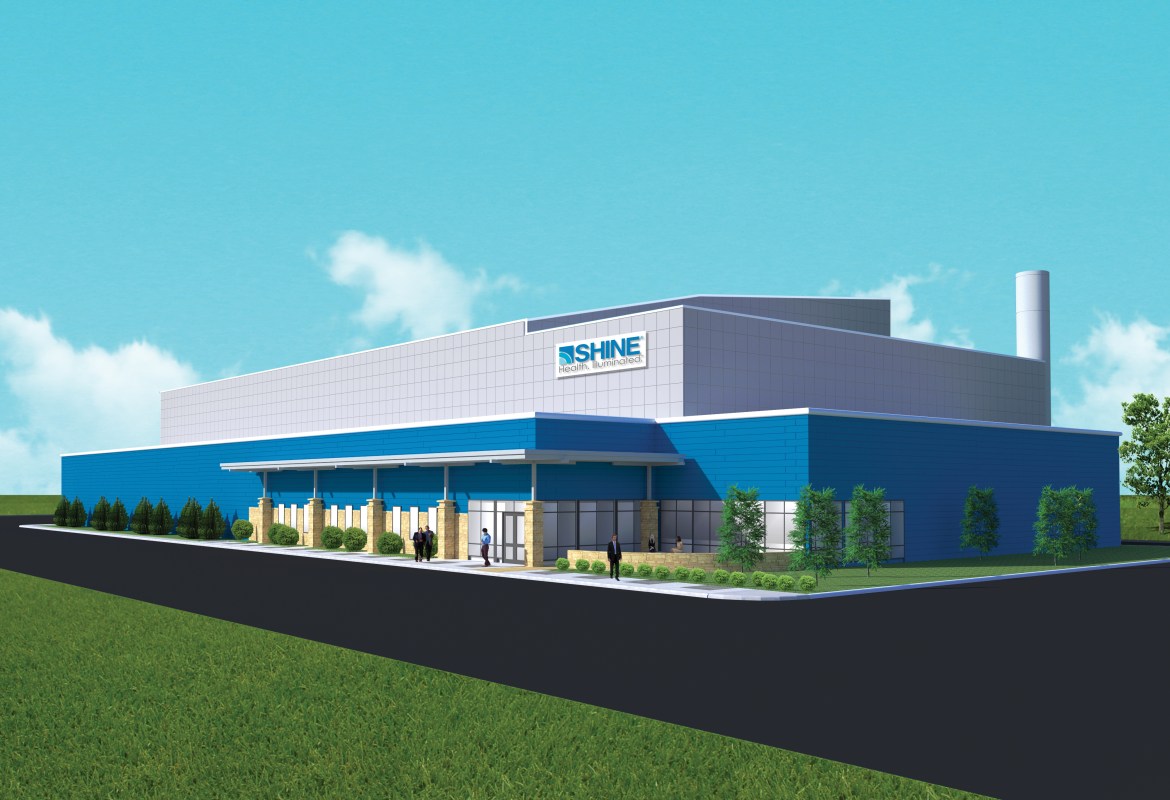
A rendering of the SHINE medical isotope production facility planned for construction in Veendam, the Netherlands. (Image: SHINE)
SHINE Europe, a subsidiary of Wisconsin-based SHINE Technologies, will work with the Netherlands’ University Medical Center Groningen (UMCG) and Delft University of Technology (TU Delft) to produce a variety of terbium isotopes for use in nuclear medicine under a grant proposal approved by the Dutch government on October 17.
The new IPS installed in Bruce Power’s Unit 7 will produce Lu-177 for treating cancer. (Photo: Bruce Power)
An international collaboration between Bruce Power, Isogen (a joint venture of Kinectrics and Framatome), and ITM Isotope Technologies Munich SE, announced a milestone marking the first time that lutetium-177, a short-lived medical radioisotope, has been produced in a commercial nuclear power reactor.
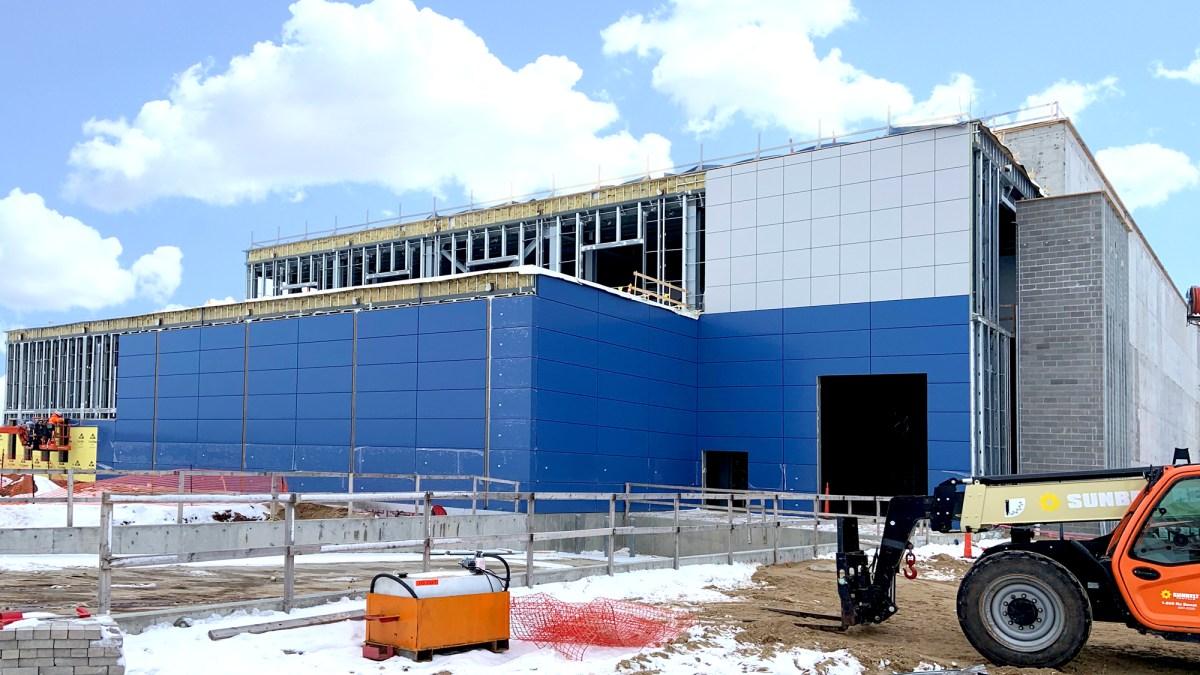
SHINE’s Mo-99 production facility under construction in Janesville, Wis. (Photo: SHINE)
SHINE Europe, a nascent subsidiary of Wisconsin-based SHINE Technologies, announced Wednesday that it has secured funding to begin designing an advanced medical isotopes facility in Veendam, the Netherlands. The new facility will use the same fusion-based neutron generator system SHINE is employing at its Janesville, Wis., facility to produce medical isotopes, including molybdenum-99, which is used in diagnostic imaging.
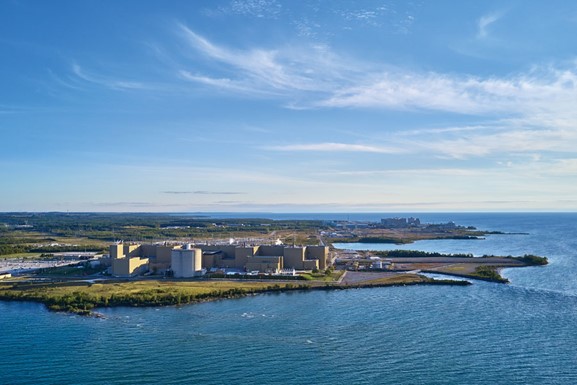
Bruce nuclear power plant in Ontario, Canada. (Photo: Bruce Power)
Bruce Power and Isogen, a partnership between Kinectrics and Framatome, have completed the installation of Isogen’s isotope production system (IPS) at Unit 7 of Bruce’s CANDU nuclear power plant in Ontario, Canada, making it the first power reactor in the world with installed capability to produce lutetium-177.
The Bruce nuclear power plant in Ontario, Canada. (Photo: Bruce Power)
Bruce Power has received approval from the Canadian Nuclear Safety Commission (CNSC) to begin the production of lutetium-177, becoming the first power reactor globally to commercially produce the medical radioisotope. Isogen, a joint venture between Framatome and Kinectrics, will produce Lu-177 at Bruce’s eight-unit CANDU nuclear power plant in Ontario, Canada, using Isogen’s isotope production system (IPS).
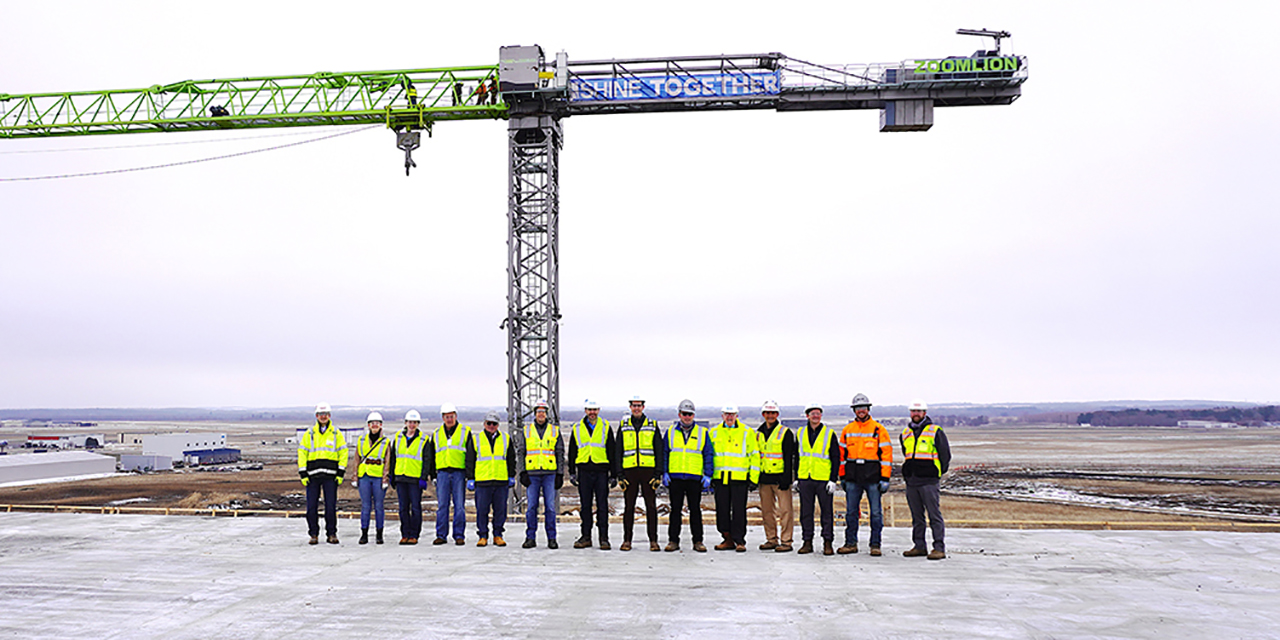
SHINE executives, construction managers, and partners commemorate a construction milestone of the medical isotope production facility in March. (Photo: SHINE)
The Nuclear Regulatory Commission has approved a request by SHINE Medical Technologies for an exemption from regulations on how commercial grade equipment is defined, allowing the company to more easily procure components for the medical isotope production facility it is building in Janesville, Wis.
NorthStar is capable of producing Mo-99 using non-uranium-based processes. Photo: NorthStar Medical Radioisotopes
Completing a 5,700-mile journey from Belgium, two 24-ton particle accelerators were delivered to NorthStar Medical Radioisotopes’ facility in Beloit, Wis., on April 22, the Wisconsin State Journal reported. Photos and a video of the accelerators being received at the facility are included in the report.

-3 2x1.jpg)
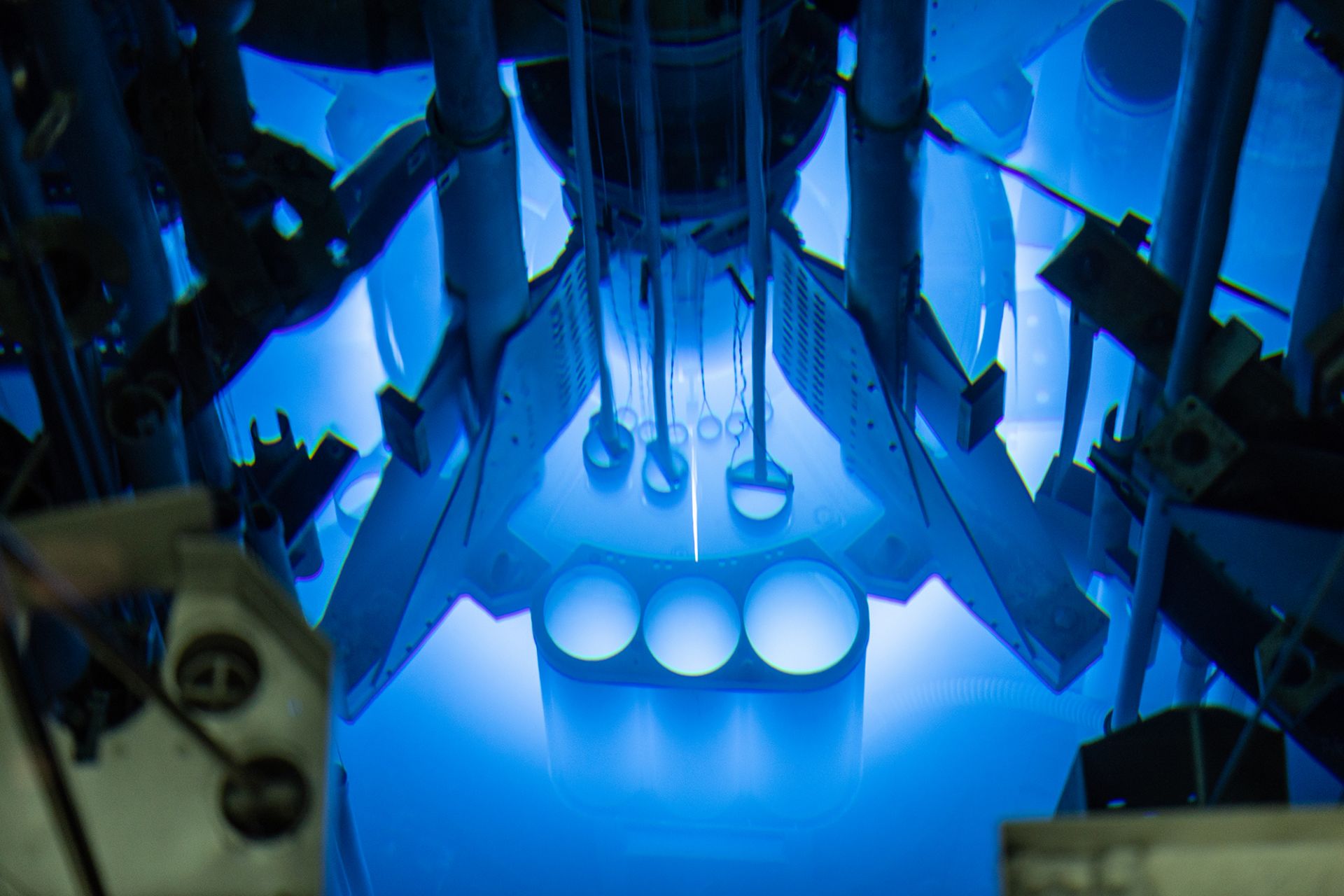
 One of the biggest challenges in the nuclear community identified by ANS in 2017 is the continuous availability of radioisotopes. Working to meet that challenge is the ANS-led Source Security Working Group (SSWG), an alliance of industry sectors—including energy, health care, and industrial radiography—that seeks to ensure continued access to radiological sources. The SSWG serves as a strong voice to protect the continued availability of radiological sources, ensuring that laws and policies are risk informed, science based, and support the highest levels of public health and safety.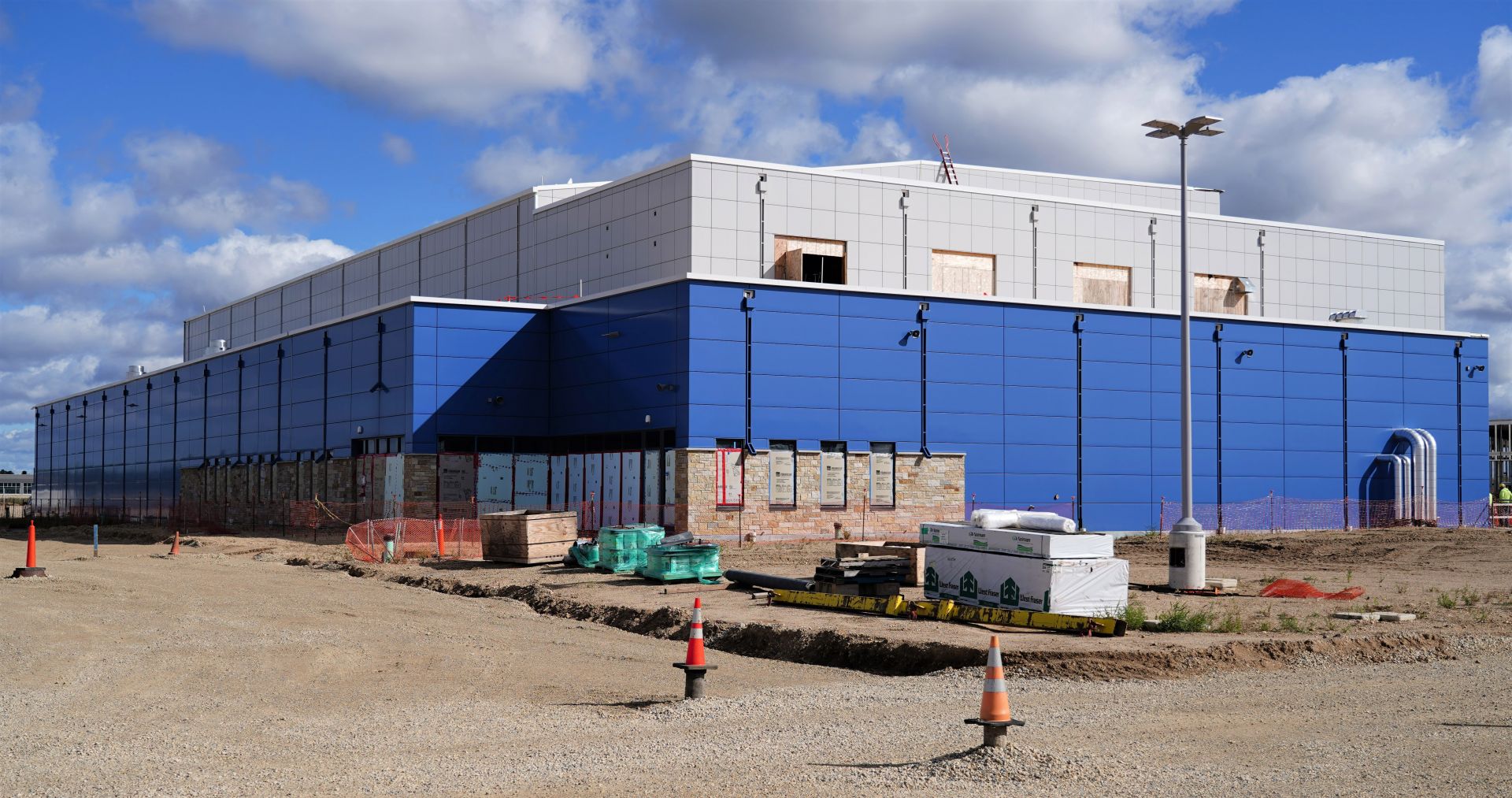

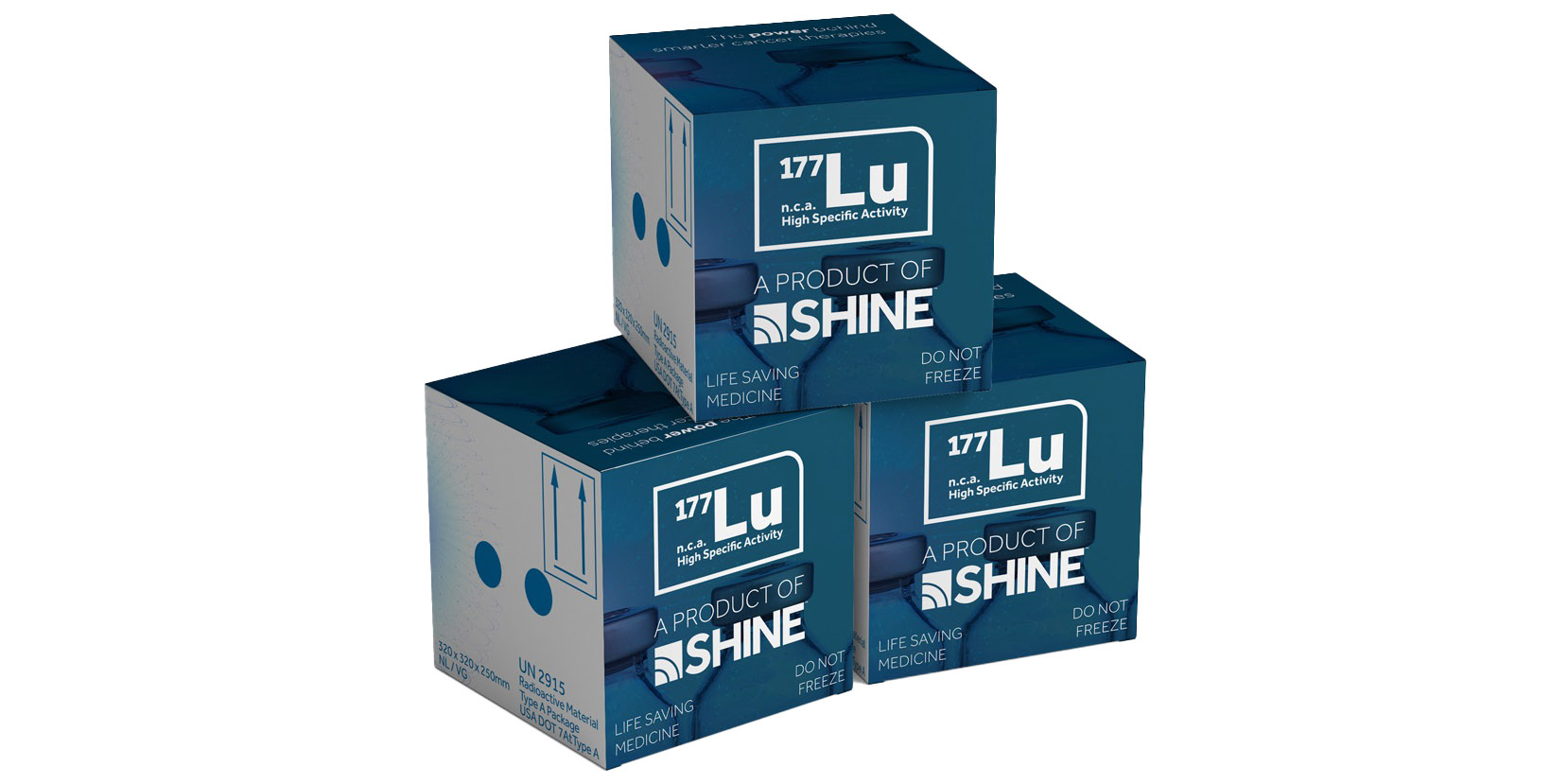
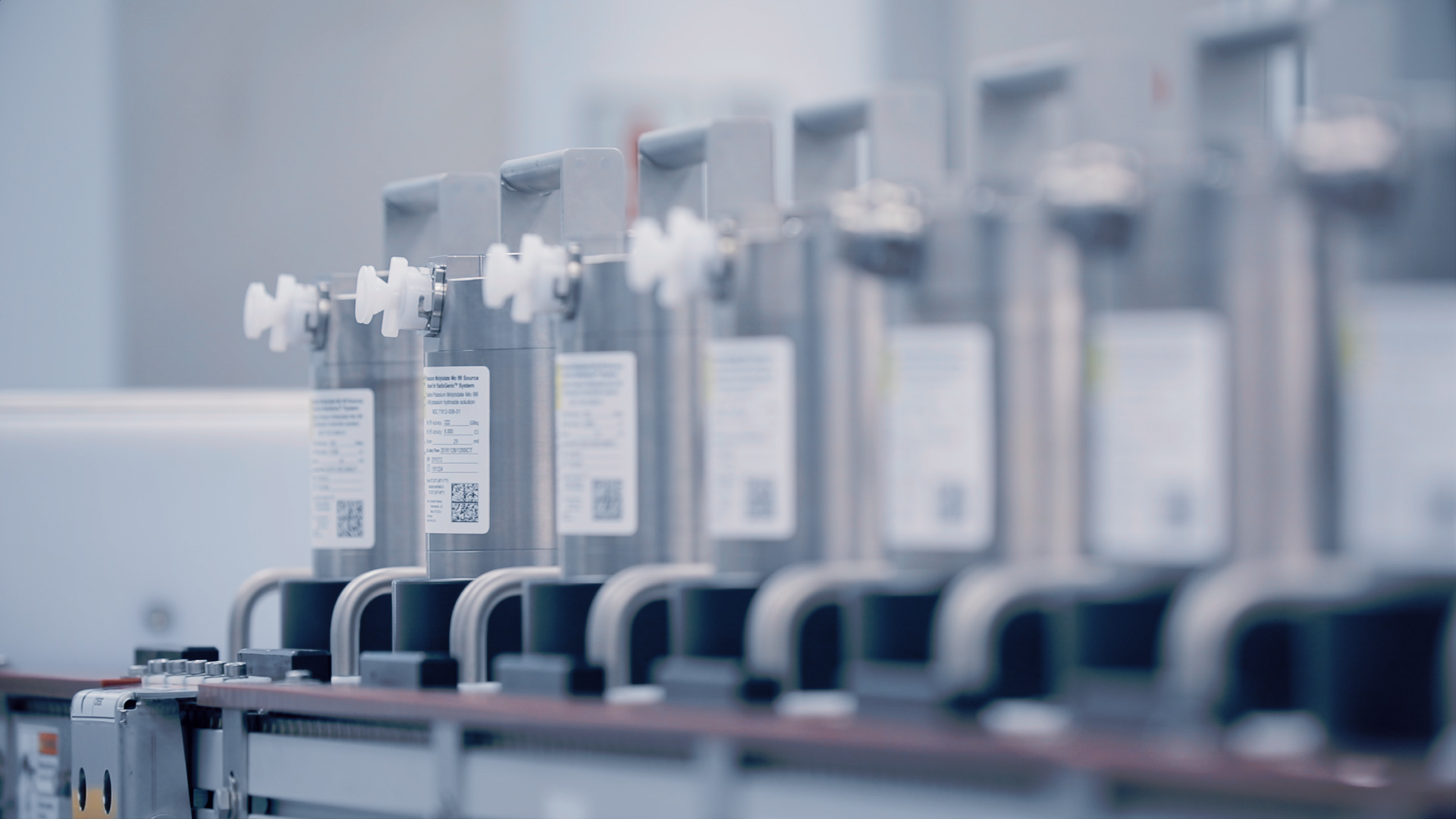
 Wisconsin-based SHINE Medical Technologies announced on November 4 that its Therapeutics division has made its first commercial sales of lutetium-177 to multiple customers. Lu-177 is a therapeutic isotope in demand by clinical trial sponsors because of its potential to treat a range of cancers.